
Blog · Family moments
How to write a tribute to your mother, with examples
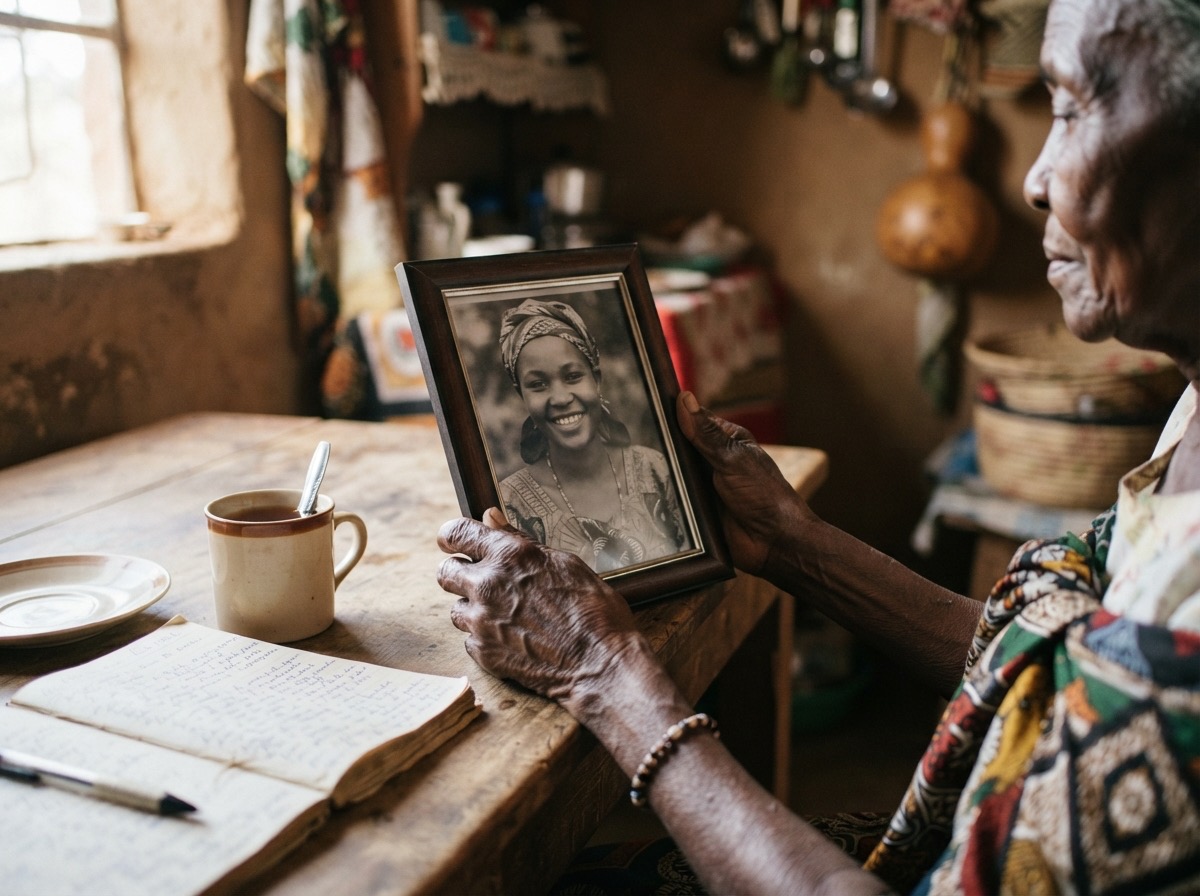
Your mother has passed on, and you have been asked to write something for her: a few lines for the funeral programme, or words to read at the service. You may feel there is too much to say, or that nothing you write will be big enough. That is normal. This guide takes you from a blank page to a short tribute that sounds like you and like her.
What a tribute is
A tribute is a short, personal message from one person, or one group such as the grandchildren, to the person who has left us. It says what she meant to you. It is usually printed under your name in the programme, and sometimes read aloud.
It is not the same as the eulogy, which is the longer speech about her whole life, given by one person for the whole family. If that is what you were asked for, read how to write a eulogy. If you wrote for your father instead, there is a guide to a tribute for your father too.
How long it should be
- In a programme: 100 to 250 words. Many people share the page, and a short tribute gets read with more care than a long one.
- Read aloud: one to two minutes, which is about 150 to 300 words.
If the family set a limit, keep to it. Whoever is putting the programme together will be grateful.
Before you write: ten minutes with a pen
Do not try to write good sentences yet. Answer a few of these in single lines.
- What is the first picture of her that comes to your mind?
- What was her kitchen like, and what did it smell like when she cooked?
- What did she always say? A saying, a warning, a blessing.
- What did she teach you without meaning to?
- What did she do for other people that few people knew about?
- What made her laugh?
- What will you miss on an ordinary Tuesday?
Choose the two or three answers that make your throat tighten. Those are your tribute.
A simple shape in four steps
- Say who she was to you. "Mum", "Mama", "my mother, my first teacher". One line is enough.
- Share one or two small memories. Small and exact beats big and general. "She tied my school tie every morning until I was thirteen and then pretended she had stopped" says more than "she was a loving mother".
- Say what she gave you. A value, a habit, a recipe, a way of treating people. Show how you still carry it.
- End with a farewell. Thank her, promise her something, or use words she used to say.
Example: from a daughter
Mama, you taught me to stir the pot slowly and to answer people gently, and I have found that both work.
I remember the night before my exams, when you sat up with me and kept the tea hot until I fell asleep on the books. In the morning my shoes were polished and I never knew when you did it.
Every time I cook for my own children, I hear you saying, "Taste before you add more."
Thank you for everything. Rest well, Mama.
Your daughter, Imani
Example: from a son
Mum, you never had much to spare, and you shared it anyway. Whoever came to our gate left with something in their hands.
When I left home for work, you folded money into my pocket and said it was "for the bus". It was not for the bus, and we both knew it.
I will try to be as generous with my time as you were with everything else.
Go well, Mum. I will look after the little ones, as you asked.
Your son, Juma
Example: from the grandchildren together
Granny Ruth, you always had a place on your bed for whoever was tired, and a story for whoever was awake.
You taught us to say thank you to the cook, to greet our elders first, and to sing even when we cannot.
We will miss your laugh at the gate and your hands on our heads when we leave.
With love, all your grandchildren
If your relationship was not simple
Not every mother was easy to live with, and not every child was close to hers. You do not have to pretend. A tribute can be short, kind and true:
Mum, we did not always agree. But you worked hard so that we could study, and I am grateful for that. I hope you are at peace.
Honest and gentle is better than long and forced. If you truly cannot write one, it is fine to ask to be part of a shared tribute with your brothers and sisters.
If you are a stepchild, or she raised you without being your birth mother
Say so with pride. "She was not the mother who gave birth to me. She was the mother who raised me, and I chose her every day." Many families have a woman like this, and she deserves the word.
Mistakes to avoid
- Copying a whole poem. One short line is fine. A whole poem pushes out your own voice.
- Listing her achievements. The life history in the programme does that. Your tribute is about the two of you.
- Old family quarrels. Not here, not in print.
- Leaving it to the last night. Programmes go to print early. Ask when your words are needed and send them a day before.
- Wrong names. Check names and places with a brother, sister or aunt before you send.
Reading it aloud
Print your tribute in large letters. Read it aloud at home twice and mark where to breathe. If your voice breaks, stop, take a sip of water and carry on. Everyone in the room understands. If you think you will not manage, ask a brother, sister or friend to stand beside you, ready to read it for you.
Keep it where it will not be lost
Tributes are written with great care and then lost with the programme. Save your words in a document, send a copy to your brothers and sisters, and keep a photograph of the printed page. One day her great-grandchildren will want to read what you wrote about her.
In Album, your family's private album on your own web address, there is a Tributes page for her story and a place for everyone's stories next to her photographs, and you can give one relative the Tribute editor role so they can put it together; see a demonstration album.