Blog › Schools, churches and companies
How to keep a school's history: principals and old students
In this guide
Why a school's history is worth keepingStep 1: Start with the list of principalsStep 2: Gather the photographsStep 3: Name the faces and the occasionsStep 4: Record the big daysStep 5: Keep the school's papers safeStep 6: Decide what the public may seeCommon mistakes to avoidHow Album helps a schoolWalk into almost any school office and you will find the same thing: a cabinet of faded group photographs, a register that nobody has opened in years, and one long-serving teacher who can tell you who was principal in 1987. When that teacher retires, the memory goes with them.
A school's history belongs to the pupils, the parents, the teachers and the community around it. This guide shows how to gather it while the people who remember are still near, and how to keep it safe for the next fifty years.
Why a school's history is worth keeping
Schools reach their anniversaries and need the story at once: a 25th, a 50th, a centenary. Old students ask for their class photograph. A new principal wants to know what came before. A journalist asks when the school was founded. Without a record, each question starts a scramble.
A kept history also makes a school proud of itself. Pupils who see the first principal, the first prize giving and the old football team understand that they belong to something that has lasted.
Step 1: Start with the list of principals
The simplest backbone for any school history is the list of those who led it. For each principal, headmaster or head teacher, write down:
- Their full name.
- The year they started and the year they finished.
- One photograph, if any exists.
- One or two things the school remembers them for.
Do the same for the chair of the board or the founding sponsor. If you do not know a year, write "about 1995" and ask someone older to confirm it later. A rough record now is worth more than a perfect record never.
Step 2: Gather the photographs
Ask in three places.
- The school itself. Staff room cabinets, the library, the old head's office and the store often hold prints nobody has looked at for decades.
- Old teachers and staff. Retired teachers usually have their own photographs of staff outings, sports days and the school buildings as they were.
- Old students. Class photographs, prize givings, drama festivals, music festivals and school trips. Ask your alumni group or class WhatsApp group to send what they have.
Take a clear picture of each print with a phone, and keep the original. Our guide on how to scan old photographs with your phone explains how to get a good copy without special equipment.
Step 3: Name the faces and the occasions
A group photograph with no names is of little use to anyone. For every photograph, write down who is in it, what the occasion was, the place and the year, even if the year is only a guess.
The best way is to sit with a group of old students or staff, show the pictures on a screen and let them call out names. These afternoons are lively and quick. Our guide on how to name the people in old photographs gives a method that works just as well for a class as for a family.
Step 4: Record the big days
Beyond people, a school has a calendar of events worth recording:
- The founding: who started the school, in which year, and why.
- Opening of new classrooms, dormitories, a library or a laboratory.
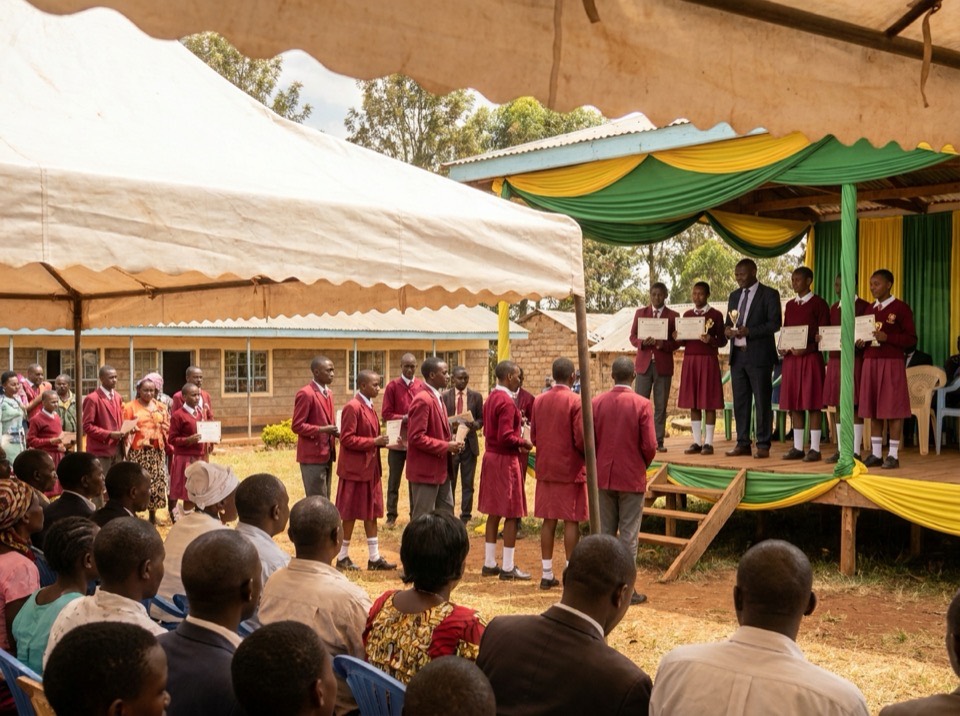
- Prize givings and speech days.
- Sports days, drama and music festivals, and the results your teams are proud of.
- Visitors: a guest of honour, a bishop, a minister, a famous old student returning.
- Hard moments too, such as a fire, a closure or a loss, written with care.
For each, a date, a few lines and one photograph is enough. You can always add more later.
Step 5: Keep the school's papers safe
Every school holds a few papers it can never replace: the certificate of registration, the title deed for the land, the charter, key board minutes, policies and agreements. Make a clean scan of each, and keep the originals in a locked cabinet. Keep the scanned copies in a place that only the owners and the board can open, and never in a shared folder everyone can reach.
Step 6: Decide what the public may see
Many schools would like the world to see their story, such as the principals, the founding and a few photographs, while keeping their members and their papers private. Decide this early and write it down. A good rule is that the story and leadership may be shown, photographs may be shown only when everyone in them would be happy for it, and documents and the list of members are never shown.
Common mistakes to avoid
- Leaving it to one teacher. Share the work among a small committee of staff and old students, so it does not stop when one person moves on.
- Keeping everything on one computer. Computers fail and offices are reorganised. Keep a second copy somewhere else.
- Forgetting the support staff. The cook, the groundsman and the night watchman know the school better than anyone. Ask them too.
- Waiting for the anniversary. Start now and the anniversary book writes itself.
How Album helps a school
A school can have its own album at school.album.ke. There, a Leadership tab shows every role, such as Principal, Deputy Principal or Chair of the Board, with everyone who has held it, their years, and who reports to whom today. A People view lists everyone in the album in groups: the board, the principals, the teachers, the support staff and the old students, and it fills itself in every time you tag someone in a photograph. Class years such as Class of 2015, and events such as Prize giving or Sports day, are categories you make yourself. There is a School documents tab for the certificate of registration, the title deed, the charter and other papers, kept for the owners and the board. By default nobody outside the album can see anything. If the owner chooses, a public page can show the school's story, its leadership, the timeline, awards and press, and photographs from the categories the owner ticks; documents and members can never be public.
If your school wants one safe place for its history, its principals and its old students, you can start with Album and see how a school album works.